Bloodline Interrogations
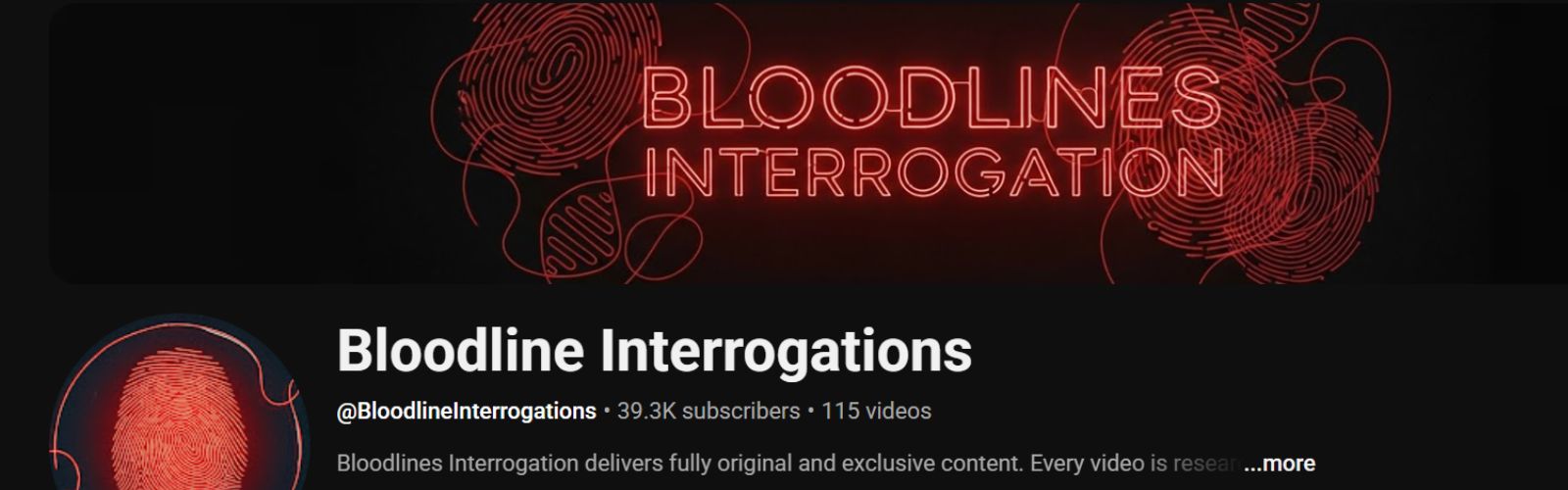
Bloodline Interrogations is a YouTube true crime channel specialising in police interrogations, criminal psychology and detailed examinations of real criminal cases. The channel produces original, documentary-style videos exploring suspect behaviour, investigative techniques and the evidence surrounding serious crimes. Its focus on the questioning process and the psychological dynamics between investigators and suspects makes it particularly suited to viewers who want to understand how interrogations unfold and how investigators work to establish what happened.
At a Glance
| Category | Tags | Details |
|---|---|---|
| Type | True Crime Channels | YouTube channel specialising in interrogation analysis and true crime documentaries |
| Focus | Interrogations | Police interviews, suspect questioning and interrogation analysis |
| Criminal Psychology | Suspect behaviour, psychological dynamics and questioning techniques | |
| Investigation | Criminal investigations, evidence and case analysis | |
| Platforms | YouTube | @BloodlineInterrogations |
Target Audience
Bloodline Interrogations is aimed at viewers interested in police interrogations, criminal psychology, suspect behaviour and the investigative process behind serious crimes. Its content is particularly relevant to people who enjoy examining how investigators question suspects, identify inconsistencies in accounts and build a clearer picture of events through interviews and supporting evidence.
The channel also suits viewers who enjoy long-form true crime documentaries rather than brief case summaries. By focusing on the interaction between investigators and suspects, its videos offer an opportunity to consider not only what happened in a case but also how investigators approached the people involved and worked to establish the facts.
What They Offer
Bloodline Interrogations describes its work as original content, with videos researched, written and produced independently. Its central themes include interrogation analysis, criminal psychology, police interview techniques and real-world crime case studies. Rather than relying solely on a conventional chronological retelling of a crime, the channel places particular emphasis on the questioning process and the behaviour of people involved in criminal investigations.
A major part of its format is the examination of police interrogations. These interviews can provide insight into how investigators approach a suspect, introduce evidence, ask follow-up questions and explore inconsistencies in an account. The way a conversation develops can become an important part of understanding an investigation, particularly when investigators are attempting to test competing explanations of events.
Criminal psychology is another important element of the channel's coverage. Its case studies explore suspect behaviour and the dynamics of police questioning, providing context for the decisions and responses seen during an interview. This approach appeals to viewers interested in the reasoning behind investigative techniques, as well as the ways people respond when questioned about serious allegations.
The channel also uses documentary-style storytelling to place interrogations within the wider circumstances of individual cases. The background to an investigation, the evidence available to detectives and the events leading to an interview can all help viewers understand why particular questions were asked and how investigators pursued their inquiries.
Bloodline Interrogations emphasises that its videos are researched and produced from scratch rather than relying on reused footage or recycled scripts. This independent production approach gives the channel room to develop individual cases around its own research, writing and presentation, rather than simply presenting a collection of interrogation clips.
What They Cover
- Police interrogations
- Suspect interviews
- Criminal psychology
- Suspect behaviour
- Interrogation techniques
- Police questioning strategies
- Criminal investigations
- Real-world crime cases
- Evidence and inconsistencies
- Confessions and changing accounts
- Investigative developments
- Documentary-style case analysis
⭐ Our Take
What makes Bloodline Interrogations appealing is its focus on one of the most fascinating parts of true crime: the police interview. While many channels concentrate on telling the story of a crime from beginning to end, interrogation-focused content gives viewers a closer look at the conversations that take place during an investigation and the way detectives work through a suspect's account of events.
We particularly like the opportunity to look beyond the words being spoken and consider the wider context of an interview. Why are certain questions being asked? What evidence might investigators be working with? How does an interview change when an account becomes inconsistent or new information is introduced? These are the sorts of questions that make interrogation analysis interesting for viewers who enjoy examining the details rather than simply following the headline story.
The channel's emphasis on criminal psychology adds another dimension. Understanding the dynamics of an interrogation can make a case more engaging, especially when the discussion explores investigative decisions and the behaviour of the people involved. Of course, behaviour or body language alone cannot establish guilt, and an interview needs to be considered alongside the wider evidence, but the questioning process can still provide a fascinating window into how an investigation develops.
We also appreciate the focus on original research and independently produced documentaries. In a crowded true crime space, having a clear editorial focus helps a channel establish its own identity. Bloodline Interrogations has chosen a specific area of criminal investigation and builds its storytelling around that subject, making it a natural fit for viewers who enjoy interrogation breakdowns and detailed case analysis.
Overall, Bloodline Interrogations is worth exploring if you enjoy the investigative and psychological side of true crime. Its emphasis on police interviews, suspect behaviour and the evidence behind criminal cases offers a different perspective from channels that concentrate primarily on the crime itself. For viewers who like to examine how investigators approach a case and work towards establishing what happened, it is a channel to add to the watchlist.