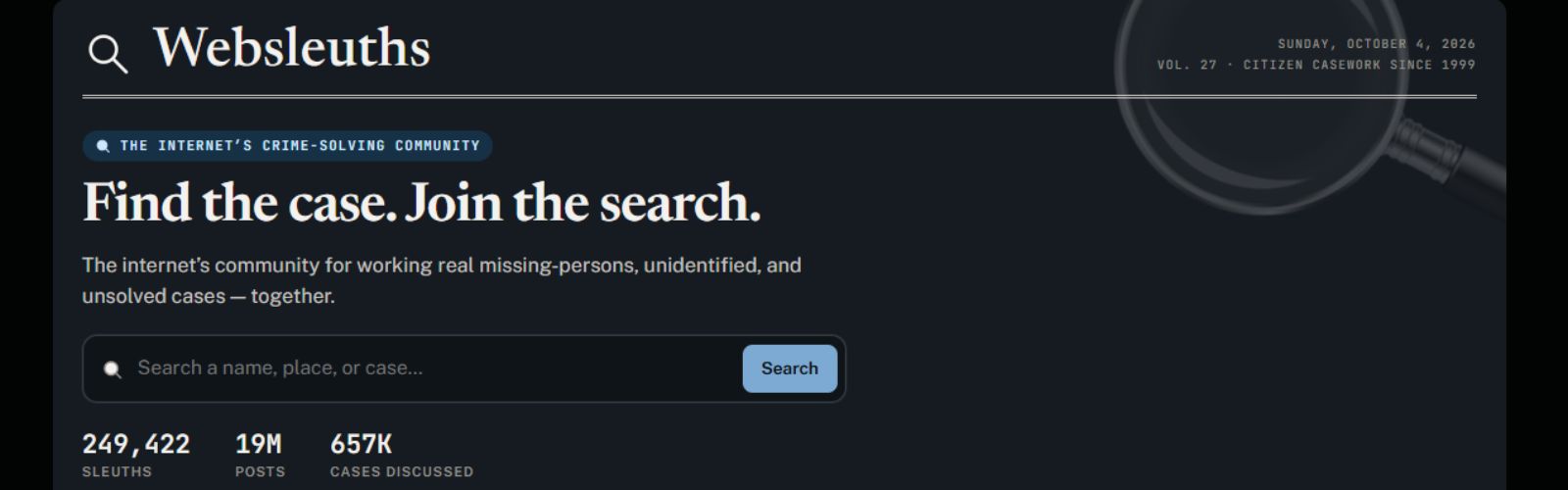
True crime websites have become an important part of the way people explore real cases, investigations, and the wider world of crime. Unlike a single documentary or television episode, a website can bring together different types of information in one place, allowing visitors to explore a subject at their own pace and follow the details that interest them most.
Depending on their purpose, true crime websites can cover everything from individual murder cases and missing persons to criminal investigations, court proceedings, forensic evidence, historical crimes, and unsolved mysteries. Some focus on particular cases or offenders, while others take a broader look at crime, policing, investigations, and the people connected to them.
A good true crime website can contain much more than written articles. Visitors may find case timelines, photographs, videos, podcasts, interviews, maps, documents, court information, investigative records, and links to additional sources. Some sites also provide databases that make it easier to search for names, locations, dates, or particular types of crime.
For many people, the appeal is not simply knowing what happened, but being able to explore the details and understand how the pieces of a case fit together.
Websites can also provide a valuable place for cases that receive limited attention elsewhere. Historical cases, lesser-known investigations, unidentified victims, and long-running missing-person cases can remain accessible online long after their original news coverage has disappeared. In other situations, a website may bring together information that has previously been scattered across newspapers, public records, documentaries, and other sources.
There is also considerable variety in how true crime websites approach their subjects. Some are designed primarily as research resources, while others take an editorial or storytelling approach. Some concentrate on current cases, whereas others explore crimes from decades or even centuries ago. The result is a broad online landscape where readers can move from a single case into related subjects, locations, people, investigations, and historical events.
Because true crime deals with real people and real events, the quality and context of information matter. Responsible websites distinguish between established facts, reported information, allegations, and unresolved questions, while recognising that many cases contain information that can change as investigations and legal proceedings develop.
Whether someone is researching a particular case, learning about investigative methods, looking into a historical crime, or simply discovering a new area of true crime, websites provide a flexible way to explore the subject. They can serve as starting points for research, collections of detailed information, or gateways into stories that continue to raise questions long after the original events took place.