48 Hours - CBS True Crime
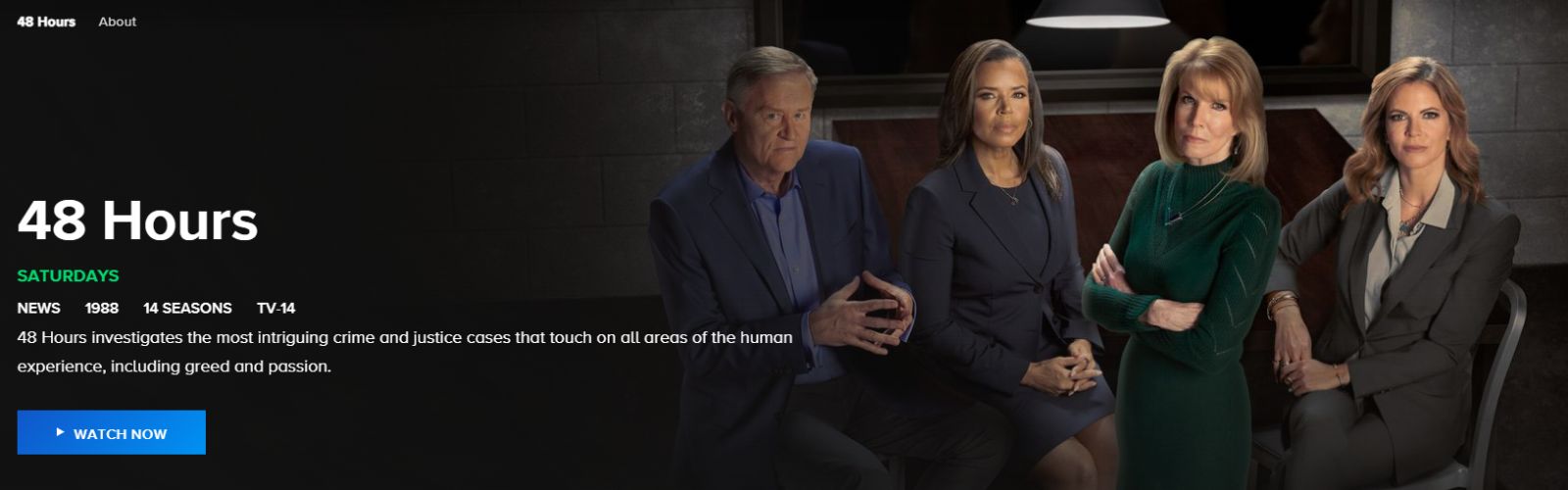
48 Hours is one of the pioneering true crime television programs, having premiered on CBS in 1988 and continuing to investigate crime and justice cases almost four decades later. The program has built a reputation for detailed reporting, extensive research, compelling interviews and a willingness to revisit cases as new evidence, developments and questions emerge. Alongside the television series, 48 Hours has developed a substantial online presence through its website, YouTube channel, social media accounts and an expanding collection of true crime podcasts.
At a Glance
| Category | Tags | Details |
|---|---|---|
| Type | Documentaries | Long-form television true crime investigations |
| Podcasts | 48 Hours and related true crime podcast series | |
| Websites | CBS News - 48 Hours | |
| Focus | Mystery | Unsolved cases, mysteries and questions surrounding criminal investigations |
| Criminal Justice | Criminal justice, court proceedings and legal developments | |
| Investigation | Criminal investigations, evidence and investigative reporting | |
| Missing Persons | Missing-person investigations and cases | |
| Platforms | YouTube | @48hours |
| X Social | @48hours | |
| TikTok | @48hourscbs | |
| Spotify | 48 Hours podcasts | |
| @48hourscbs | ||
| 48 Hours |
Target Audience
48 Hours is aimed at viewers who want detailed true crime investigations, criminal cases, courtroom developments, police investigations and long-form documentary storytelling. Its television format allows individual cases to receive considerably more attention than a short news report, while its podcast and digital coverage provides additional ways to follow investigations and revisit cases.
The program is particularly suited to viewers who enjoy cases where the available evidence does not necessarily produce an immediate or obvious answer. Rather than simply presenting a crime and its conclusion, 48 Hours frequently explores competing explanations, investigative decisions, witness accounts, forensic evidence and the legal process surrounding a case.
What They Offer
48 Hours is a long-running CBS true crime and newsmagazine program that investigates crime, justice and the people caught up in major criminal cases. The series premiered in 1988 and has developed a substantial archive of investigations covering murders, missing persons, cold cases, criminal trials, wrongful convictions and other complex cases. CBS describes the program as examining the complexities of each crime through key evidence and interviews, with its reporting having contributed to exonerations and the reopening and resolution of cold cases.
One of the defining features of 48 Hours is the amount of reporting that can go into a single story. Correspondents and producers can spend considerable time examining evidence, interviewing investigators, speaking with family members and revisiting the locations connected to a case. The result is a style of true crime documentary that is generally more interested in understanding what happened than simply reaching the fastest possible conclusion.
The program has also demonstrated a long-term commitment to particular cases. Some investigations have been revisited years or even decades after the original events as new evidence emerges, new technology becomes available, legal developments occur or previously overlooked information comes back into focus. One example highlighted by CBS is correspondent Erin Moriarty's reporting on the case of Crosley Green, which she has followed for 25 years while examining inconsistencies surrounding his conviction and its aftermath.
This ability to return to old cases is an important part of what makes 48 Hours different from a conventional weekly news program. A case does not necessarily end when the original episode finishes. New developments can lead the team back to the story, allowing viewers to see how investigations, court proceedings and evidence have changed over time.
Today, the 48 Hours brand extends well beyond traditional television. CBS provides an extensive online archive of episodes, articles and photo galleries, while full episodes are also available through platforms including YouTube, Paramount+, Pluto TV and Netflix. The program also operates a 48 Hours FAST channel, giving viewers another way to access its extensive back catalogue.
The podcast side of 48 Hours has become a major part of the brand as well. The main 48 Hours podcast adapts the show's investigations for audio, while Post Mortem goes behind the scenes with correspondents and producers to discuss the evidence, dead ends, reporting challenges and unexpected developments encountered while producing individual stories. Case by Case provides weekly updates on major criminal stories as they unfold, while Erin Moriarty's My Life of Crime takes listeners deeper into investigations she has reported on during her career.
The result is a true crime operation that can be followed in several different ways. Viewers can watch a television episode, explore the accompanying CBS News material, follow updates on social media or listen to a podcast that adds additional reporting and behind-the-scenes information. This gives 48 Hours considerably more reach than a traditional television program alone.
What They Cover
- True crime investigations
- Homicide cases
- Missing persons
- Cold cases
- Unsolved crimes
- Criminal trials
- Wrongful convictions
- Police investigations
- Forensic evidence
- Witness testimony
- Investigative interviews
- Major crime stories
- Case developments
- Long-running investigations
- Cases revisited years or decades later
- Behind-the-scenes reporting
- True crime podcasts
Podcasts and Digital Coverage
The 48 Hours podcast network has become an important extension of the television program. The main podcast allows listeners to follow 48 Hours investigations without watching the television broadcast, while Post Mortem adds another layer by bringing correspondents and producers into the conversation about how the stories were reported.
Other podcast projects connected with the 48 Hours team include Case by Case, which provides weekly updates on major criminal stories, and My Life of Crime with Erin Moriarty, which takes listeners inside investigations involving killers and people accused of crimes. CBS also produces individual limited series around particular cases, meaning the podcast catalogue extends well beyond simple audio versions of television episodes.
The podcasts are available through major podcast services, including Spotify and Apple Podcasts, and the current 48 Hours podcast feed also connects listeners with the wider 48 Hours+ offering. New episodes, classic investigations and companion material give long-time viewers additional ways to revisit cases and hear information that may not have appeared in the original television broadcast.
⭐ Our Take
For us, 48 Hours is one of the true pioneers of modern true crime television. Having been on the air since 1988, it has been investigating criminal cases for decades, long before the current explosion of true crime documentaries, podcasts and streaming channels. You can see the experience in the way the program approaches its stories. There is a tremendous amount of research, reporting, planning and production behind many of the episodes, and that depth is one of the reasons the show has remained relevant for so long.
One of the things we particularly appreciate is that 48 Hours is prepared to stay with a story. Some cases don't simply disappear after an episode airs. The team has returned to investigations years later when new evidence, new technology, legal developments or previously overlooked information have changed the picture. In some instances, the reporting has continued for decades. That kind of long-term commitment gives viewers the opportunity to see how a case develops rather than treating it as a story that begins and ends in a single television episode.
We also like that not every 48 Hours story is presented as a simple case of good versus evil with an obvious answer. Some investigations are complicated, evidence can point in different directions and the circumstances surrounding a crime can remain difficult to interpret even after a conviction. Rather than telling viewers exactly what they should think, the program often presents the evidence, interviews and competing explanations and allows the audience to reach its own conclusions. For true crime viewers who enjoy examining the facts for themselves, that is a major strength.
Another advantage is the sheer amount of material now available around the program. The television series remains the heart of 48 Hours, but the website, YouTube channel, podcasts and social media accounts mean there are plenty of ways to keep up with cases. The podcast side is particularly useful for people who want additional discussion and reporting, with Post Mortem offering a behind-the-scenes look at how some of the investigations were put together.
There is one downside for viewers outside the United States, however. Because 48 Hours is fundamentally a US television program, access to the complete television archive can be inconsistent internationally. Not every full episode is uploaded to YouTube, and some episodes or streaming services may not be available in countries outside the United States. This can make it frustrating for international viewers who want to work through the show's enormous back catalogue in order.
Even with that limitation, we think 48 Hours remains one of the essential names in true crime. The combination of decades of reporting, detailed investigations, experienced correspondents and a willingness to revisit cases makes it much more than just another true crime show. If you enjoy stories where the evidence is allowed to speak for itself and where the final answer isn't always as straightforward as it first appears, 48 Hours is absolutely worth following.
You should also read:
Coffeehouse Crime - True Crime Stories
Coffeehouse Crime is a popular true crime YouTube channel hosted by Adrian, covering strange, chilling and often deeply disturbing criminal cases from around the world. Since launching in December 2020, the channel has grown into a substantial true crime community, with more than 2.2 million…
Continue reading...
Websleuths - True Crime Community
Websleuths is a long-established true crime community where members work together to discuss and research missing persons, unidentified people, unsolved cases and major criminal investigations. Established in 1999, the community has grown into a substantial online resource for people interested in following cases, sharing information…
Continue reading...
Grizzly True Crime
Grizzly True Crime is a true crime podcast and media channel created by Gisela K., covering criminal cases, missing persons, live trials and ongoing investigations through detailed case breakdowns and evidence-based analysis. Gisela's coverage draws on court documents, police interviews, publicly available records and case…
Continue reading...